Tuesday, 18 December 2012

Penang’s Cultural Heritage Trail (Part 2) ~ Khoo Kongsi


Penang has many heritage sights that have been declared as UNESCO World Heritage site.  After visiting the Penang Peranakan Museum at Lebuh Gereja, our next stop ~ the Khoo Kongsi which is another one of Penang’s top tourist attraction.

Situated within the famous heritage enclave of Georgetown, accessible through Cannon Street, Khoo Kongsi is another ‘must visit’ while in Penang other than the Penang Peranakan Museum.

Entering through a shaded lane in between a row of houses brings you to a open air area with well maintained old houses on both sides of the narrow road. Entrance fee of RM5.00 is paid inside one of the houses which have been converted into a small collection office with a souvenir shop on its opposite side. Walking further in you’ll arrive to a vast open-air area where the majestic Khoo Kongsi building stands. Here there are no guided tours & one have to slowly walk through the Clanhouse/Museum reading & absorbing tales of its historic past.

Built by the Khoo clansmen in the late 19th century, the Khoo Kongi buildings, mainly comprising of the Clanhouse and a traditional theatre has retained its history and charm for more than 100 years.  The clanhouse boasts a magnificent hall with altar for deities, intricate carvings, elaborate murals, carvings & richly ornamented beams.  Gold name plaques hang on the walls honouring those who have done the clan proud. It also houses a collection of ancestral tablets.

The Clanhouse

The intricate & elaborately designed rooftop of the clanhouse


The concrete staircase leading up to the main hall of the clanhouse
Procession plagues

The ceiling is covered with elaborate & intricate carvings & richly ornamented beams of the finest wood bearing the mark of master craftsmen from China

The altar inside the main hall


Murals decorate the inner walls of the clanhouse ~ each telling a story.

The left wing of the clanhouse was once a kitchen area and it has now been turned into a mini museum exhibiting artefacts from the past era.
The left wing which is the kitchen area
 
 
As you walk through from the left to the right wing you can see detailed history of the Khoo clan.
Gold name plagues honouring those who have done the clan proud
Name chart of Khoo generation
 
An old logbook of Khoo family names
The exit door from the Khoo clanhouse by the right wing
The right wing of the clanhouse

Standing right opposite the Khoo clanhouse is the traditional theatre or Opera house. It was once used for stage performance & other entertainment.  Chinese operas are still staged at the theatre during the 7th Lunar month
The Administrative Building
The Administrative building is the place where clansmen held meetings and settle clan affairs. The building consists of two double-storey bungalows joined together.
The Khoo Kongsi all lighted standing in all its grandeur (taken from one of the many lighted display inside the museum)
And finally........

A memorable shot before ending our heritage tour of Penang, which has been a great eye opener for my whole family.


Thursday, 13 December 2012

Penang’s Cultural Heritage Trail (Part 1) ~ Pinang Peranakan Museum


I have always been fascinated about Penang, especially more after having read the endless articles in the newspapers boasting about its rich heritage & culture.

As most know Georgetown has been declared as a UNESCO World Cultural Heritage City quite some time back, but I never gave it much thought until I discovered that my paternal great-grandmother was actually a Penang Peranakan Nyonya. Guess that stemmed my interest in the heritage of Penang. To know more about the heritage of my forefathers, I went to visit the Pinang Peranakan Museum together with my family to discover more about the heritage of the Baba & Nyonya that I have not known anything about. 

Visiting the Pinang Peranakan Museum gave us an insight on the cultures of the Penang Babas & Nyonyas.  Their guided tours will open up your knowledge on the lifestyles of the peranakan community in Penang. You may at first think that RM10 entrance fees is rather expensive but after completing your tour of the Museum, you will feel that the RM10 is really worth it as you will leave with more knowledge & understanding of the peranakan culture...and lots of photos too (^-^)

Arriving at the gates of the museum, we were awed by the beauty of the craftsmanship of the main doorway and balcony.
 
 
PINANG PERANAKAN MUSEUM ~ The iron gates

View as entering the main gates

The entrance to the museum ~ the rustic balcony with pale green facade will seem all too familiar if you have watched the Singapore drama “The Little Nyonya”

The main courtyard greets you once entering the mansion

The main courtyard also serves as an air-well with large concrete floor as you enter the mansion.

Once entering, on the left is a beautifully wooden crafted doorway painted with gold designs.  Formerly the main entrance to the mansion (which is now closed) opens up into this room, with a large reception room for guests where many business discussions were held. Whilst the smaller room beside is where the Nyonyas gather & play ‘cherki’ (a traditional card game) while their husbands hold their discussions next door.

The doorway with its intricately crafted wooden doors

View from the top floor of the mansion

The classical staircase leading to the upper floor of the mansion

The intricate designs on the staircase

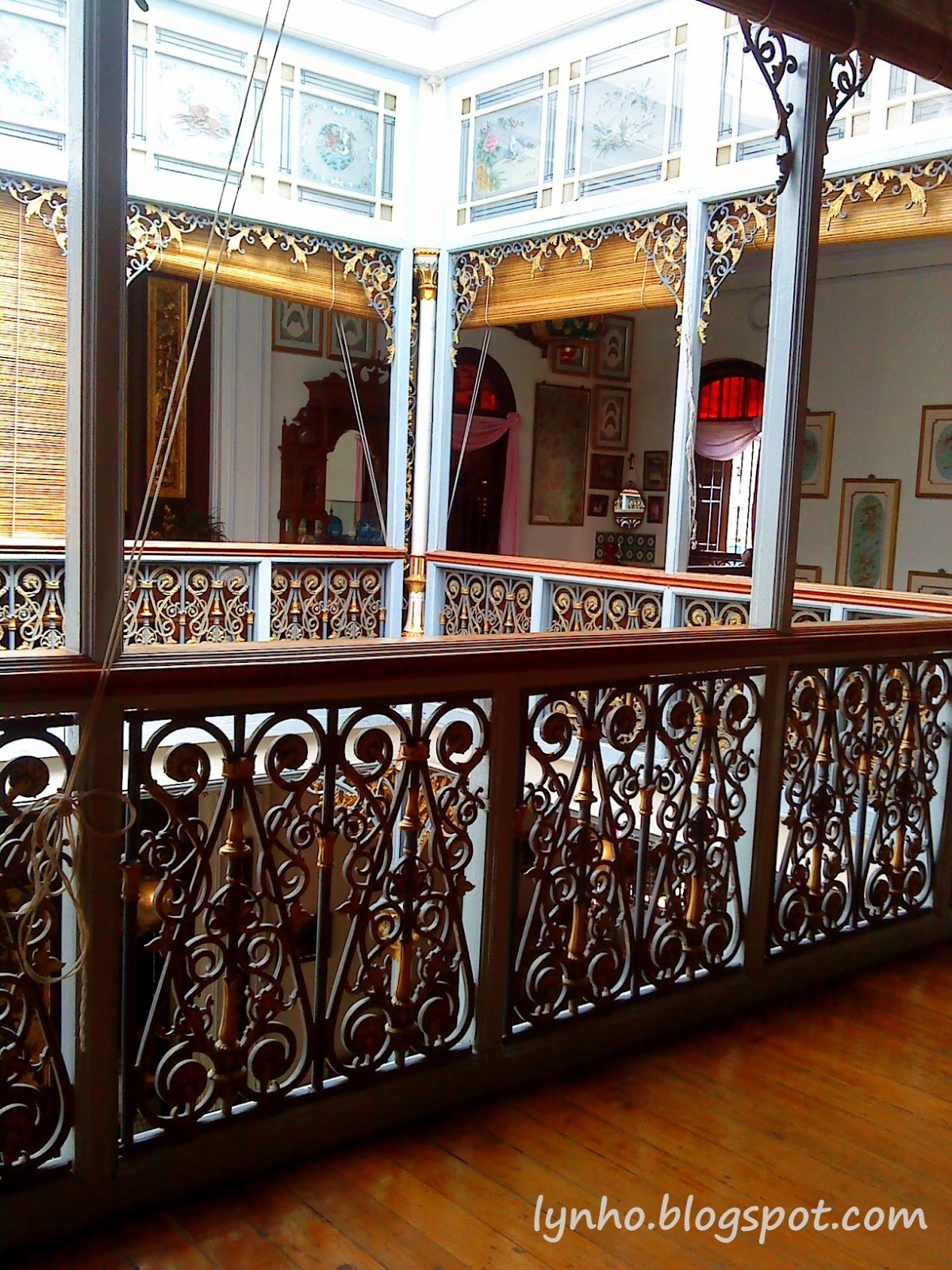
On the first floor, you can see beautiful iron work on four sides of the inner balcony.

Antique vases & stool decorate the main courtyard


Antique furnitures,chairs & windows adorn the main courtyard

Behind these beautiful windows is a dining room used for guests

Side dining chamber with western cutlery & tableware used for entertaining English guests

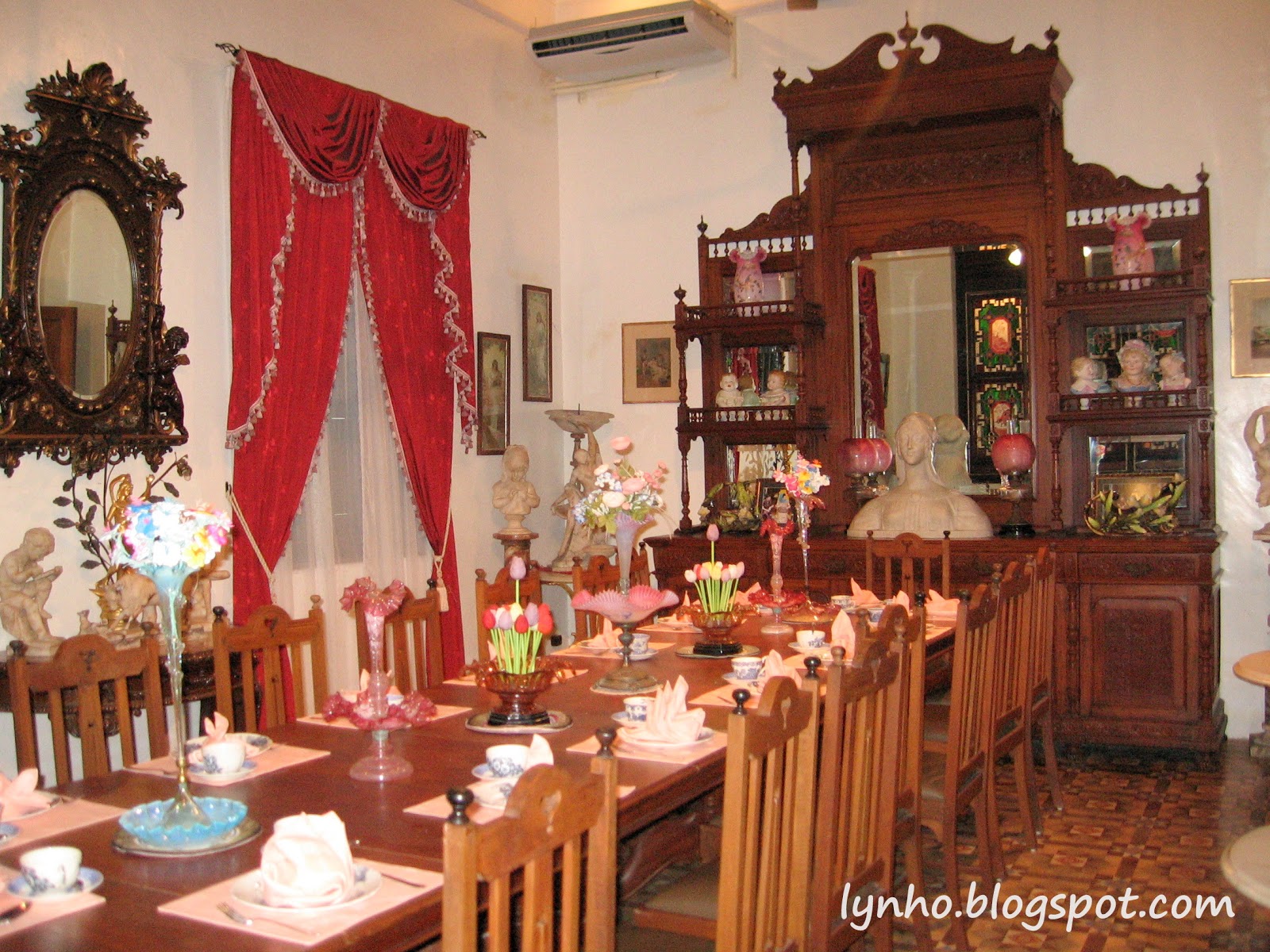
Main dining room used for guests~ ‘tok panjang’ literally translated as ‘long table’

Going up the lovely wooden staircase to the top floor, more antiques are displayed. Exhibits ranging from nyonya brooches (kerosang), hairpins (cucuk sanggul), traditional covered jars (kamcheng), metal belts, gold bracelets, table wares are displayed.

Angklets & Belt

Gold jewellery

Brooches, hairpins & other accessories

Traditional covered jars (Kamcheng)


Traditional tableware

Some of the chambers feature the traditional peranakan bridal rooms, bridal headwear & various vanity tables

Bridal bed

Bridal Crown worn by the Nyonya

Traditional peranakan headgear

Vanity tables in the bridal chamber

Hand sewn embroidery tablecloth

A typical nyonya bedroom

Clothes cupboard & vanity table

Sewing room where the nyonyas make their long shirt (baju panjang), embroideries & beaded shoes (kasut manik)

A beautifully embroideried ‘baju panjang’

The hallways of the top floors are complete with antique furnishings

Chair where they laze to smoke opium
Upstairs living room


Peranakan lacquerware carriers

Imported antique glassware

An old antique radio
In another section of the mansion stands the Ancestral Hall


In the back wing of the mansion, there is a large dining room especially for VIP guest. This room looks more stately and out of the ordinary from the rest of the dining rooms in the mansion.  Walking into this dining room feels like stepping into a totally different era ~ more to the English era.


The doorway to the VIP dining room, used for entertaining foreign guests


Tables with lovely glassware


At the far end of the dining chamber a glass door opens out to a small courtyard with a pond
The beautiful wall design


Doorway from the dining chamber to the kitchen area
The stairway used by the servants


The kitchen area also has another open air-well
Air-well in the kitchen area


Tableware used by the servants


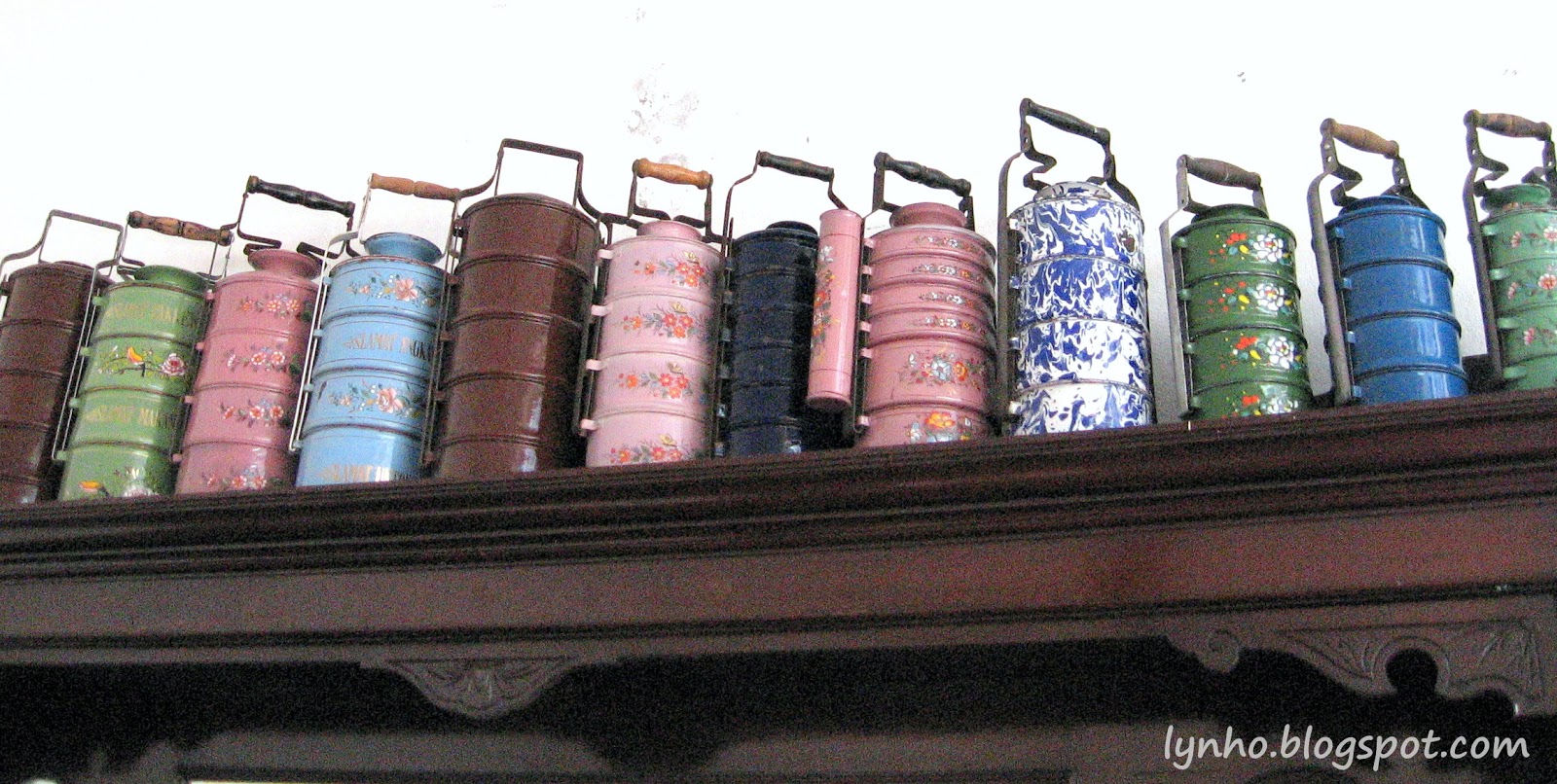
Tiffin Carriers

From top left: Mortar & pestles used for pounding spices,
Food covers, kettle, pots & antique urinal pots.


Top : Peranakaan kandar baskets; Bottom : Food cover & food grinder
Flasks, cooking utensils & Chinese tea cups


Spices used in peranakan cooking

A typical peranakan cooking area


Our tour of the Pinang Peranakan Museum ended with a photo with our tour guide. You will be surprised as we are, that he is a foreigner. Honestly, our first thought when we met him was “ Huh? A foreigner? What does he know about the peranakan heritage??”  But his knowledge of the history & artefacts of the museum is far beyond any local here. ~ and he speaks fluent English too d(^-^)b


The cast of 'The Little Nyonya'